Ancient Amber Fossil Reveals Extinct Insect with Extraordinarily Long Feeding Apparatus
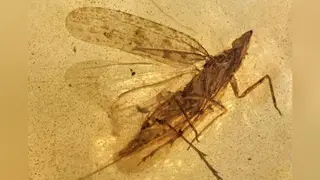
Scientists have identified a previously unknown insect species preserved in Cretaceous amber dating back approximately 99 million years, designated Cretodorus noonoo. The specimen possessed mouthparts that extended to nearly double its body length while maintaining structural integrity despite their elongated form. The creature belonged to Neazoniidae, an extinct family of plant-feeding insects, with the amber sample recovered from deposits in Kachin.
The discovery of Cretodorus noonoo represents a significant window into ancient insect morphology during the Cretaceous period. Preserved in fossilized tree resin from Kachin deposits, this specimen demonstrates an adaptation strategy rarely documented in the fossil record—an exceptionally elongated feeding structure that scientists have determined remained functional despite its disproportionate size relative to the insect's body. Such preservation in amber allows researchers to examine fine anatomical details that typically deteriorate in other fossilization processes.
This finding contributes to broader paleontological understanding of plant-feeding insects and their evolutionary responses to environmental pressures. The Neazoniidae family, now extinct, apparently developed specialized feeding mechanisms suited to specific ecological niches during the Mesozoic Era, offering clues about insect diversity and plant-insect relationships in prehistoric ecosystems.
This discovery may enhance scientific knowledge of insect evolution and adaptation, potentially informing biological understanding of how organisms solve structural engineering challenges. The findings could interest researchers studying biomechanics, evolutionary biology, and ancient ecosystems. For the general public, such paleontological work may deepen appreciation for Earth's biological history and the sophisticated strategies extinct species employed. Museums and educational institutions could utilize this specimen to illustrate evolutionary diversity.