Observers Capture Lunar Occultation of Jupiter Across Multiple Continents
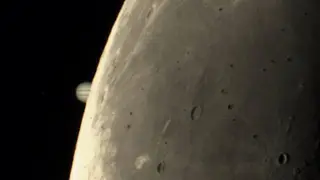
On October 6, 2026, the moon passed in front of Jupiter, creating an occultation visible to observers across most of the U.S., Mexico, southeastern Canada, and parts of West Africa. Those outside the occultation path witnessed the moon positioned close to Jupiter, presenting a visually striking celestial alignment. EarthSky community members shared photographs documenting the event from various locations worldwide.
A lunar occultation occurs when the moon's orbital path carries it directly between Earth and another celestial body, temporarily blocking our view of that object from certain geographic locations. On October 6, 2026, observers positioned along a specific path crossing North America and West Africa experienced this phenomenon with Jupiter, one of the brightest planets in our night sky. The alignment was particularly notable because Jupiter's four largest moons remained visible even as the planet itself disappeared behind the lunar disk.
For observers outside the occultation path, the event still offered compelling viewing. The close approach between the moon and Jupiter created a striking visual conjunction—a moment when two celestial objects appear near one another in the sky. Amateur astronomers and casual stargazers worldwide documented the event through photography, demonstrating how such predictable astronomical events continue to engage diverse observers across continents.
Lunar occultations and planetary conjunctions may serve an important social function by fostering widespread public engagement with astronomy and science. Such accessible celestial events could inspire interest in space exploration among varied audiences and strengthen amateur astronomy communities through shared observation experiences. The documentation of these events by global participants may also contribute to citizen science efforts and educational initiatives, potentially increasing scientific literacy and encouraging individuals to develop observational skills and deeper curiosity about planetary science.