South Korea's Nuri Rocket Successfully Deploys 14 of 15 Satellites in Milestone Test
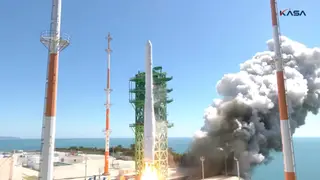
South Korea's KSLV-II (Nuri) rocket completed its fifth flight on October 6, successfully deploying 14 of 15 satellites into orbit from the Naro Space Center. The mission marked the rocket's first attempt to sequentially deploy multiple primary satellites, including five micro-satellites designed to monitor the Korean Peninsula for national security and disaster response. One cubesat failed to deploy, but the accomplishment demonstrates enhanced capability for precision multi-satellite deployment.
South Korea's Nuri rocket has now completed five orbital missions, with each successive flight expanding its operational scope. The latest mission represents a significant technical advance: the rocket successfully managed the complex task of releasing multiple satellites designed for identical purposes in precise sequence, spacing each deployment by 35-40 seconds to prevent orbital collisions. The five NEONSAT microsatellites, each weighing under 220 pounds, carry high-resolution cameras capable of distinguishing objects as small as 3.3 feet in black-and-white imagery. Together, the full constellation—once completed next year with five additional satellites—will provide multiple daily imaging passes over the Korean Peninsula for both security monitoring and disaster response applications.
The one unsuccessful deployment involved a CubeSat developed by private company Quaternion, while nine of ten smaller satellites ejected normally. This near-perfect success rate on a significantly more demanding mission than previous flights demonstrates the vehicle's maturing reliability for commercial and government payloads.
The successful deployment capability could strengthen South Korea's independent space infrastructure and reduce reliance on international launch providers for national security applications. Multi-satellite constellation missions may become increasingly attractive to governments and commercial operators seeking frequent Earth observation coverage. However, the mission's near-complete success—with one satellite failing to deploy—suggests continued refinement is needed before Nuri becomes a fully reliable option for complex, time-sensitive payloads.