Displaced Black Holes May Hold Clues to Early Massive Black Hole Formation
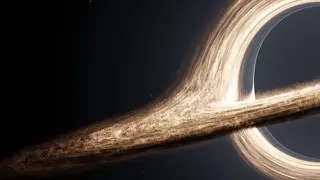
A simulation followed galaxies and black holes across about 12.6 billion years to examine how the first giant black holes arose. It found that black holes flung away from galactic centers, often during mergers, can preserve information about their host galaxies' histories. Their locations may also help astronomers understand the origins of massive black holes.
Researchers led by Emma Jane Weller and Priyamvada Natarajan at Yale, with Colin J. Burke of the University of North Texas, used the ASTRID cosmological simulation. It followed galaxies and black holes for roughly 12.6 billion years, modeling gravitational drag that alters black-hole orbits. They studied host galaxies spanning 10 million to one trillion solar masses in stars.
A black hole counted as wandering when it lay outside the radius containing half its galaxy’s stellar mass. In low-mass galaxies, mergers often left the sole massive black hole off-center, since such systems lacked enough material to pull it inward quickly. This extends a 2023 ASTRID prediction of many wandering intermediate-mass black holes near cosmic noon, about 10 billion years ago.
This research may shape how astronomers interpret galaxy surveys and black-hole observations, potentially refining models of early massive black-hole growth. It could influence future telescope targeting and public understanding of cosmic evolution. Scientists, observatories, and science communicators may benefit from clearer clues, while broader audiences could gain a more nuanced picture of how galaxies and their central black holes coevolve.