Hubble Archive Hints at Planet Born After Its Star Died
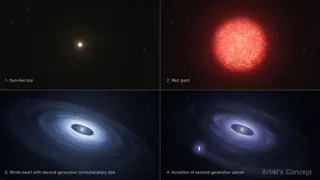
Astronomers revisited old Hubble observations of the white dwarf HS 0209+0832 and identified niobium in its spectrum. The team says this chemical evidence points to a planet that could have formed from material expelled by the dying star. If verified, it would be the first confirmed planet of this second-generation type.
The white dwarf HS 0209+0832 is roughly 1% of the Sun's radius yet about 60% of its mass. When Hubble observed it in 1999, about 100 spectral features went unidentified. Reanalysis with an updated chemical database matched many of them to niobium.
Niobium had not previously been reported in any white dwarf studied. Because such heavy elements are forged only in the extreme conditions of dying stars rather than by core fusion, the team interprets the abundance as a signpost of a massive planet assembled after the star's death. Findings appeared in Nature Astronomy.
If confirmed, this result could reshape how astronomers think about planetary systems' longevity, suggesting worlds might arise even after their host star's death. That may influence future observing proposals and archive-mining efforts, affecting researchers who rely on telescope time and funding. For the public, it could add a striking new chapter to the search for planets beyond our Solar System, though confirmation will require independent verification.