US Pushes for Full European Involvement in Upcoming Ukraine Peace Negotiations
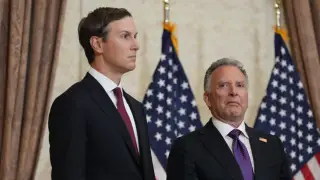
U.S. envoys Steve Witkoff and Jared Kushner are urging Russia to allow direct European participation in future Ukraine peace talks, aiming to include European representatives in the next round after current trilateral discussions. While European officials are already holding separate consultations in Abu Dhabi, Washington seeks their formal inclusion in main negotiations. The move intensifies Europe’s ongoing debate over unified representation.
On November 10, 2026, U.S. envoys Steve Witkoff and Jared Kushner pressed Russia to allow direct European participation in the next round of Ukraine peace negotiations during talks in Abu Dhabi, marking a shift from the current trilateral format involving Ukraine, Russia, and the United States. The White House aims to make this week’s session the final one without full European involvement, signaling urgency in integrating Europe into formal negotiations. While European officials—including representatives from Britain, France, Germany, Italy, NATO, and the European Commission—have already held parallel consultations in Abu Dhabi, their role remains advisory rather than decision-making. Ukraine’s delegation, led by Rustem Umerov, opened coordination talks with Western partners ahead of direct engagement with Russia’s representative, Kremlin aide Vladimir Medinsky. Key issues expected to be discussed include ceasefire arrangements, security guarantees, and postwar reconstruction. President Volodymyr Zelensky confirmed the trilateral talks had begun and emphasized Ukraine’s readiness to pursue de-escalation, while calling on Russia to match that commitment.
The push for European inclusion intensifies an ongoing debate over unified representation. Italian Prime Minister Giorgia Meloni has advocated for a single European negotiator with clear authority, warning that fragmented diplomacy risks undermining Europe’s influence. She urged EU Council President António Costa to address the issue at an upcoming informal summit in Dublin. Meanwhile, U.S. officials welcomed recent direct calls between Finnish and Norwegian leaders and Russian President Vladimir Putin, suggesting such engagement strengthens Europe’s diplomatic leverage. However, no consensus has yet emerged on who should represent Europe or how its positions will be coordinated. The EU’s institutional role remains contested, with national governments and bloc-level bodies vying for influence. What remains unresolved is whether Russia will accept this expanded format, how European unity will be achieved, and whether the U.S. will continue to steer the process despite growing calls for a more balanced multilateral approach.
The U.S. push to include Europe directly in Ukraine peace talks could reshape the geopolitical dynamics of the negotiation process, potentially increasing legitimacy and reducing the perception of American dominance. If successful, it may strengthen European cohesion and signal a shift toward shared responsibility in postwar reconstruction and security architecture. However, the lack of consensus among EU members—evidenced by Meloni’s call for unified leadership—suggests that internal divisions could delay or weaken Europe’s voice at the table. This situation echoes earlier diplomatic challenges during the 2015 Iran nuclear talks, where fragmented European positions initially hampered coordination until a unified framework emerged. In this case, the absence of a clear European negotiator may lead to inconsistent messaging or missed opportunities for influence. Markets in defense, energy, and infrastructure could react to shifts in perceived stability, while NATO’s role may be reevaluated if Europe assumes greater diplomatic weight. What to watch for next is whether the Dublin summit produces concrete proposals on representation, how Russia responds to expanded participation, and whether Ukraine sees tangible progress on security guarantees or a ceasefire.