UK to Manufacture Ukrainian-Designed Drones for Military Use in Britain
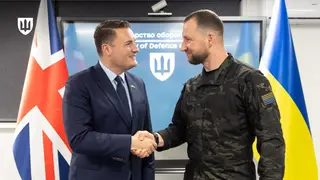
The United Kingdom and Ukraine have finalized an agreement to produce 'middle strike' and long-range drones in Britain, funded by a £500 million aid package. Ukrainian Defense Minister Yevhen Khmara and UK Defense Secretary Wes Streeting signed the deal in Kyiv, aiming to combine Ukraine's combat experience with British manufacturing. The initiative supports Ukraine's growing drone capabilities and strengthens defense cooperation between the two nations.
On November 21, 2026, Ukrainian Defense Minister Yevhen Khmara and UK Defense Secretary Wes Streeting signed a landmark agreement in Kyiv to manufacture “middle strike” and long-range drones in Britain for Ukraine’s Armed Forces. The initiative, funded by a £500 million ($654 million) portion of the UK’s larger £10 billion ($13.3 billion) aid package for Ukraine in 2027, marks a significant shift from direct military aid to co-production and industrial collaboration. These drones are designed for missions ranging from 35 kilometers behind the front lines to deep strikes up to 300 kilometers, enabling Ukraine to target Russian military infrastructure beyond immediate combat zones. The deal builds on a prior agreement reached in June 2025 between Ukrainian President Volodymyr Zelensky and then-UK Prime Minister Keir Starmer, signaling a deepening strategic partnership. Ukraine has evolved from repurposing consumer drones to developing sophisticated military UAVs since 2022, and this collaboration aims to scale proven systems using British manufacturing expertise. While specific production sites and timelines remain undisclosed, the project reflects a broader trend of Western nations leveraging their industrial capacity to bolster Ukraine’s defense resilience. What remains unclear is the exact division of intellectual property, the role of private British defense contractors, and how this production will be integrated into Ukraine’s existing drone supply chains. The UK’s decision to produce these systems domestically also raises questions about export controls and potential future technology transfer.
This agreement could significantly alter the dynamics of the war in Eastern Europe by enhancing Ukraine’s ability to conduct sustained long-range strikes, potentially shifting the balance in contested regions. The UK’s investment in co-production may also strengthen its own defense industrial base, fostering innovation and supply chain resilience. Comparable to the U.S. military’s support for Ukraine through the Foreign Military Sales program, this model may encourage other European nations to move beyond aid deliveries toward joint production, deepening defense integration. However, such collaboration may also provoke escalation concerns in Moscow, which has already responded to Western arms transfers with increased attacks on Ukraine and neighboring countries. The long-term impact on European security architecture remains uncertain—while it could deter further Russian aggression, it may also entrench a prolonged conflict. What to watch for includes whether other NATO members follow suit with similar co-production deals, how Russia adapts its air defenses, and whether this model extends to other weapon systems like artillery or electronic warfare platforms. The success of this initiative may also influence future defense procurement policies across the West.