Voyager 1 Becomes First Spacecraft to Reach One Light-Day from Earth
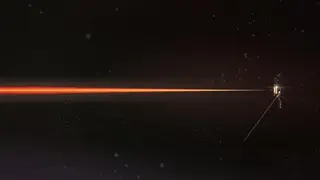
On November 18, 2026, NASA’s Voyager 1 spacecraft became the first human-made object to travel one light-day from Earth, reaching a distance of approximately 16.1 billion miles. Communication with the probe now takes exactly 24 hours due to the vast distance, highlighting the immense scale of interstellar space. The achievement marks a historic milestone in space exploration and underscores Voyager’s enduring role in heliophysics and planetary science.
On November 18, 2026, NASA’s Voyager 1 spacecraft became the first human-made object to travel one light-day from Earth, reaching a distance of approximately 16.1 billion miles (25.9 billion kilometers) at 2:16 a.m. PST (5:16 a.m. EST). At this distance, radio signals from Earth take exactly 24 hours to reach the probe, and any response takes another full day, making real-time communication impossible. This milestone marks a profound achievement in space exploration, underscoring the enduring legacy of the Voyager mission, which launched in 1977 during a rare planetary alignment that enabled a Grand Tour of Jupiter, Saturn, Uranus, and Neptune. Voyager 1 crossed the heliosphere boundary in 2012, becoming the first spacecraft to enter interstellar space, and has since provided continuous data on the Sun’s influence beyond the solar system. The mission is managed by NASA’s Jet Propulsion Laboratory (JPL), operated by Caltech, with key leadership from figures like Joe Westlake (Heliophysics Division), Dave Gallagher (JPL director), and Ray Jayawardhana (Caltech president). The spacecraft continues to transmit a carrier signal, though it has not sent science or engineering data since November 14, 2026, raising concerns among engineers who are investigating the cause. Despite this anomaly, the probe remains functional and is still traveling at about 38,000 mph (61,155 kph). The Golden Record aboard Voyager 1, carrying Earth’s sounds and images, remains a symbolic artifact of humanity’s reach into the cosmos. What remains unresolved is the cause of the data loss and whether the spacecraft can be restored to full operational status.
The achievement of Voyager 1 reaching one light-day from Earth could inspire renewed public interest in deep space exploration and underscore the long-term value of robotic missions. While the general public may not directly interact with the data, the milestone reinforces the idea that human curiosity can transcend time and distance, potentially influencing science education and public support for future interstellar missions. Institutions like NASA and Caltech may leverage the event to advocate for sustained funding in planetary science and heliophysics, especially as new missions to the outer solar system are planned. The story echoes the impact of the Apollo 11 Moon landing, not in immediate technological change, but in shaping cultural narratives about human potential. However, unlike Apollo, which had a defined endpoint, Voyager’s ongoing journey represents a continuous, open-ended exploration—raising questions about how society values long-duration missions with uncertain outcomes. The current data gap may prompt scrutiny of aging spacecraft systems, potentially influencing design standards for future deep-space probes. What to watch for next is whether NASA can restore full data transmission, and how the scientific community will interpret the remaining carrier signal in the context of interstellar conditions.