Mysterious Cloud 9 may be the first known galaxy without any stars
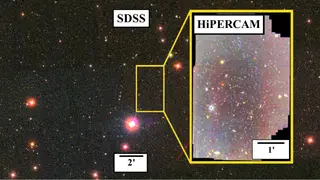
Astronomers have identified a galaxy called Cloud 9 that appears to contain vast amounts of gas and dark matter but no stars, making it the best candidate yet for a 'failed' galaxy. Located 14 million light-years away, it emits virtually no starlight despite having enough material to form a small galaxy. The discovery could provide insights into dark matter and galaxy formation.
Cloud 9 sits roughly 14 million light-years away, near the spiral galaxy M94, and holds about a million solar masses of hydrogen gas plus five million solar masses of dark matter. Despite that raw material, deep optical imaging from the Gran Telescopio Canarias—ten times deeper than earlier observations—showed no starlight whatsoever. The team used the HiPERCAM instrument for just over two hours to achieve this clarity.
The object was first flagged by radio observations of neutral hydrogen, then checked with the Hubble Space Telescope in January. Its apparent emptiness, in a relatively normal galactic environment, makes it a prime test case for decades-old theoretical predictions of “dark” galaxies—systems dominated by dark matter that never ignited star formation.
If confirmed, Cloud 9 could reshape how astronomers understand galaxy formation and the role of dark matter in the early universe. It may also refine searches for other invisible structures, potentially altering estimates of how many galaxies exist. For the public, the discovery underscores that much of the cosmos remains unseen, inviting broader curiosity about what else might be hiding in darkness—though its direct societal impact is likely limited to scientific and educational spheres.