Catastrophic Collisions May Not Destroy Hidden Oceans on Icy Moons
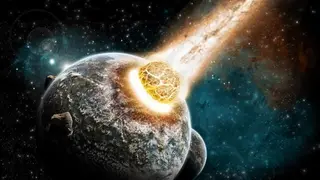
A University of Maryland study simulating massive collisions on icy moons orbiting Saturn, Uranus, and Neptune found that devastating impacts do not necessarily destroy subsurface oceans crucial for potential life. Researchers discovered that if a moon harbored an ocean before a collision, it was likely to retain one afterward, suggesting that cosmic impacts may be less destructive to habitability than previously thought. The findings could help guide the search for extraterrestrial life by indicating that moons reassembled after catastrophic shattering could still maintain the conditions needed to support organisms.
Researchers at the University of Maryland constructed dual computational models to assess collision impacts on distant moons. One simulation tracked the fragmentation and reassembly of icy bodies struck by space debris, while a complementary system monitored internal thermal dynamics across billions of years. The team examined moons ranging from 310 to 620 miles in radius, subjecting them to the most violent impacts their models could generate. By linking these two systems, scientists could determine whether reassembled moons possessed sufficient internal heat retention to maintain subsurface liquid water oceans.
The study focused on Saturn, Uranus, and Neptune's moon systems because these bodies are suspected remnants of repeated cosmic collisions early in solar system history. Understanding whether such catastrophic events preserve or eliminate subsurface oceans carries implications for habitability, since liquid water represents a fundamental requirement for life as currently understood.
This research may influence how space agencies prioritize exploration targets in upcoming missions to distant moons. If impacts prove less destructive to oceanic environments than previously believed, scientists might allocate resources toward investigating celestial bodies with known collision histories rather than exclusively targeting pristine moons. The findings could also shape how astrobiologists interpret geologic features observed by spacecraft, potentially identifying new candidates worthy of future investigation for signs of extraterrestrial microbial life.