Ancient Fossil Reclassified: Gilled Creature Wasn't a Reptile as Previously Thought
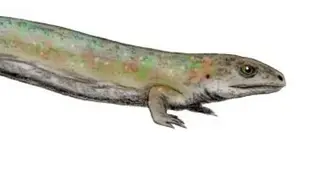
A specimen long considered a primitive reptile has been reclassified following new analysis revealing it possessed gills rather than lungs. The discovery fundamentally alters our understanding of this organism's place in evolutionary history and its relationship to true reptiles. The finding demonstrates how anatomical reexamination can overturn long-held paleontological conclusions about early vertebrate evolution.
Scientists have reexamined a fossil specimen that had been classified within the reptile group for many years. Through detailed anatomical analysis, researchers identified gill structures rather than lung tissue, suggesting this organism relied on aquatic respiration. This finding necessitates a reconsideration of how the creature fits into the broader evolutionary tree, particularly regarding the emergence of early vertebrate lineages and the transition between aquatic and terrestrial forms.
Paleontological classifications occasionally require revision as technology and analytical methods improve. This case exemplifies how careful anatomical study can reveal details missed in previous examinations, prompting scientists to reassess an organism's evolutionary relationships and challenge assumptions about prehistoric life that may have stood for decades.
This reclassification may refine scientific understanding of vertebrate evolution and early animal diversification, with potential implications for textbooks and museum displays. Academic institutions and educators could face updates to educational materials reflecting the new interpretation. For the broader public, the discovery underscores how scientific knowledge evolves through continued investigation, and that established conclusions in paleontology remain subject to revision as evidence accumulates and methods advance.