China and US Lead Surging Battery Storage Expansion with 108 GW Added in 2025
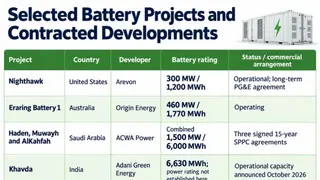
Global battery storage installations surged 40 percent year-over-year in 2025, reaching 108 GW of new capacity, with China and the United States commanding the largest market shares while Australia, Saudi Arabia, India and Chile pursue different deployment strategies. Utility-scale systems represented approximately 87 GW of 2025 additions, driven by renewable energy integration, wholesale electricity trading, and corporate power supply contracts. Manufacturing capacity, particularly in China through companies like CATL and BYD, is keeping pace with deployment demand across diverse regional markets.
Battery storage has become integral to managing renewable energy systems worldwide, as intermittent solar and wind generation requires reliable discharge capacity during peak demand periods. The 108 GW expansion in 2025 demonstrates accelerating investment in grid-scale infrastructure, with utility contracts driving deployment in developed markets while emerging economies pursue storage solutions tailored to their specific grid challenges and energy policies.
Manufacturing capacity, particularly concentrated among Chinese producers, has matched deployment growth and enabled equipment distribution across multiple continents. This supply-chain development allows diverse markets to implement storage infrastructure at pace, though countries often pursue distinct economic models—from long-term service agreements in Saudi Arabia to wholesale market participation in Texas.
Expanded battery storage may reshape electricity markets by reducing peak pricing volatility and enabling deeper renewable energy penetration without grid instability. Grid operators, utilities, and industrial consumers could benefit from more flexible power supply management, while communities may experience improved reliability during transition periods away from fossil fuels. However, storage economics remain dependent on favorable price spreads and policy support, meaning deployment patterns may concentrate in regions with favorable regulatory conditions rather than distributing equitably across all markets seeking decarbonization.